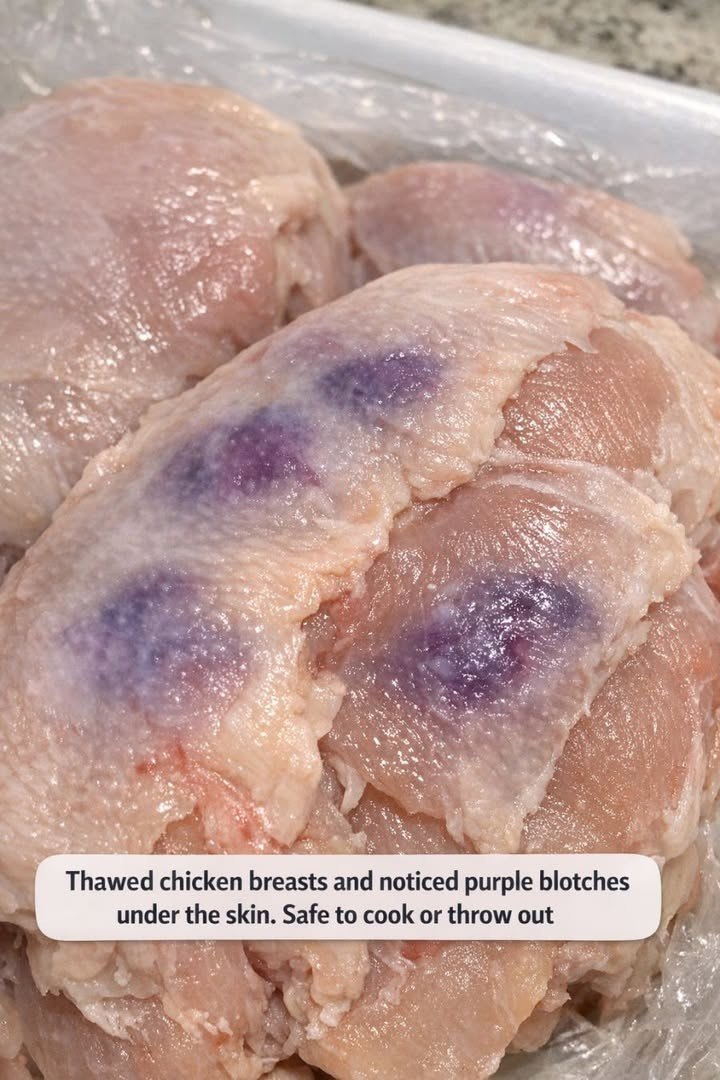
Ah, this is an important food-safety question 🥩⚠️
Here’s what’s going on:
Purple Blotches on Chicken: What It Means
- Blood spots / bruising: Often occurs in processing or handling. The meat itself can look purple/red under the skin.
- Fresh chicken sometimes has small purplish areas, especially near bones or where veins were.
Important:
- Smell test: Fresh chicken should have little to no odor. Sour or ammonia-like smell = throw it out.
- Texture test: Slimy or sticky surface = not safe.
- Color test: Small purple spots alone aren’t usually dangerous if the chicken is otherwise fresh, but large dark areas or greenish/gray tones = discard it.
Safety Rule
If the chicken smells normal, feels firm, and has only minor purple blotches, it’s safe to cook thoroughly (165°F / 74°C internal temperature).
If there’s any doubt—bad odor, sliminess, or weird coloring—throw it out. Chickenborne illness isn’t worth the risk.
✅ Pro tip:
Cooking doesn’t always remove bacteria from spoiled chicken, so never taste-test questionable chicken.
If you want, I can give a quick visual guide on what purple spots on chicken mean vs. what’s unsafe—super handy for future reference.
Do you want me to make that?